WHAT IS FASCIA?
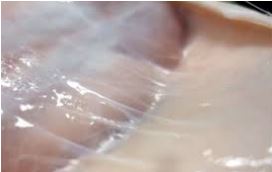
Fascia is a thin but mighty casing of connective tissue that surrounds every organ, blood vessel, bone, nerve fiber and muscle. It is similar in ways like saran wrap, where in that likeliness it holds everything in place, and sticks to everything, including itself! The tissue does more than provide internal structure; fascia actually has nerves that make it almost as sensitive as skin.
IS IT ONE LAYER?
There are three main types of fascia:
• The superficial fascia, is mostly associated with the skin, gives the skin movement.
• The deep fascia, is associated with muscles, bones, nerves and blood vessels
• The visceral fascia, is mostly associated with the internal organs.
HOW CAN FASCIA AFFECT ME?
If you’ve ever wondered what fascia actually looks & feels like, you’ve probably seen it and felt it when you’ve worked with a chicken breast. When we are inactive for a period of time, or have a repetitive action (movement) that is taxing on one part of the body, the fascia starts to stick to itself (this is called an adhesion). Even things like trauma such as a surgery or an injury can have negative affects on the fascia. When you’ve been sitting for an extended period of time & feel stiff when you stand, it may actually be your muscle fascia giving you that stiff feeling, limiting your free motion. Once your fascia has tightened up, it doesn’t want to let go because the fascia can withstand up to 2,000 pounds of pressure per square inch.
In and after your massage treatment, your therapist can help to release the fascial restrictions that are causing you discomfort including fascial stretching, as well as give you stretching techniques that may be beneficial for your continued healing while reducing your pains and mobility restrictions.
Fascia is a very important part of our bodies, and should be
treated with the great respect it deserves.