
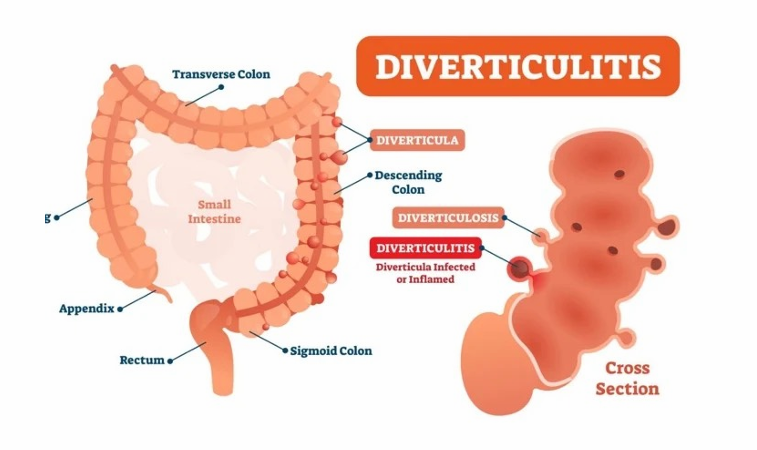
Diverticulosis is a condition that affects the large intestine (colon). Science does not quite know what causes this condition, but what used to once be known as a rare condition, is quite common in the western world of today, compared to other countries such as Asia and Africa which leads us to believe it is food related and the foods we have available to us.
As someone who has this condition, and has experienced both a diverticulitis flare up and attack, I wanted to bring the awareness of this sometimes crippling condition that many are unaware of. Diverticulosis is the condition, where as diverticulitis is the inflamed & painful symptom of the condition.
The colon itself has pouches throughout it, called diverticula, and this is where the unused food we have consumed passes through for elimination. Sometimes, abnormal pouches form off of the diverticula can form (diverticulosis) where debris from the colon can sometimes be trapped. When this happens, diverticulitis flare ups or attacks can occur.
Abdominal bloating (a feeling like trapped gas but you know it’s not) is a common indicator, followed by lower left sided pain is the most common symptom, however, to be diagnosed with the condition, CT scans are done by a medical professional. Having diverticulosis alone isn’t necessarily a problem. Most people never experience any symptoms or complications from it. However, in some cases, it can become very serious/life threatening. For example, if you develop an infection and it goes untreated for too long, it can lead to complications like bowel rupture leading to sepsis. If you’re one of a small number of people who have frequent bleeding from their diverticula, you could risk serious blood loss.
Unfortunately, once you have diverticulosis, there is no reversing it. It’s something you need to learn to hopefully manage, and most times – it’s trial & error along the way. When having a flare up or even worse, an attack, it is important to pay attention to how you are feeling. Most times, a flare up will ease on its own with lots of fluid and allowing the digestive tract to relax (reduce food intake), but caution must be taken. Many times, hospitalization may be required depending on the severity of the condition. your condition is imperative. If you find the pain is getting worse, or there is blood in your stool – immediate ER is required.
A TOUCH OF ENERGY – Trudy Parolin, RMT CDT